
With These Simple Methods, by Tina Martin

Climate anxiety is a real and growing emotional response to the accelerating impacts of climate change. People experiencing it often feel fear, grief, anger, or paralysis when they think about the future of the planet and their place in it. This article speaks directly to people living with climate anxiety, offering ways to steady the mind and take meaningful action.
A brief orientation before we dive in
Climate anxiety is not a personal failure. It’s a rational response to real risks. Relief comes from two parallel tracks: calming the nervous system and regaining a sense of agency. The sections below move between those tracks, sometimes practical, sometimes emotional but because both matter.
A shared experience, and a reason to keep reading
A few summers ago, Maya, a middle school teacher in Arizona, found herself dreading the weather forecast. Every excessive heat warning made her heart race. She recycled, voted, talked to her students about sustainability and yet the anxiety lingered. What helped wasn’t pretending everything was fine. It was learning how to care for her mental health while channeling her concern into tangible steps.
Grounding the Mind When the Climate Feels Overwhelming
Anxiety thrives on constant threat signals. Climate news can feel endless, so intentional boundaries are essential.
Some people find relief in therapy or support groups focused on eco-anxiety. Others lean into mindfulness practices, time in nature, or journaling that names fears without judgment. The goal isn’t to “stay positive,” but to build emotional resilience.
A few practices that many people find helpful:
Limiting doom-scrolling to specific times of day
Naming emotions out loud (“I’m feeling grief,” not just “I’m stressed”)
Connecting with others who share climate concerns
Replacing helplessness with one small, chosen action
These steps don’t fix the climate crisis but they can make it possible to stay engaged without burning out.
Turning Concern Into Climate Action at Home
Action reduces anxiety when it’s realistic and aligned with daily life. You don’t need to overhaul everything.
A simple personal climate checklist
Energy: Switch to LED bulbs; adjust your thermostat slightly.
Food: Reduce food waste; try one more plant-based meal per week.
Transport: Combine errands; walk or bike when feasible.
Consumption: Buy less, repair more, borrow when possible.
Money: Support banks or funds that invest responsibly.
Each item is small. Together, they reinforce the feeling that your choices matter.
Community Actions That Multiply Your Impact
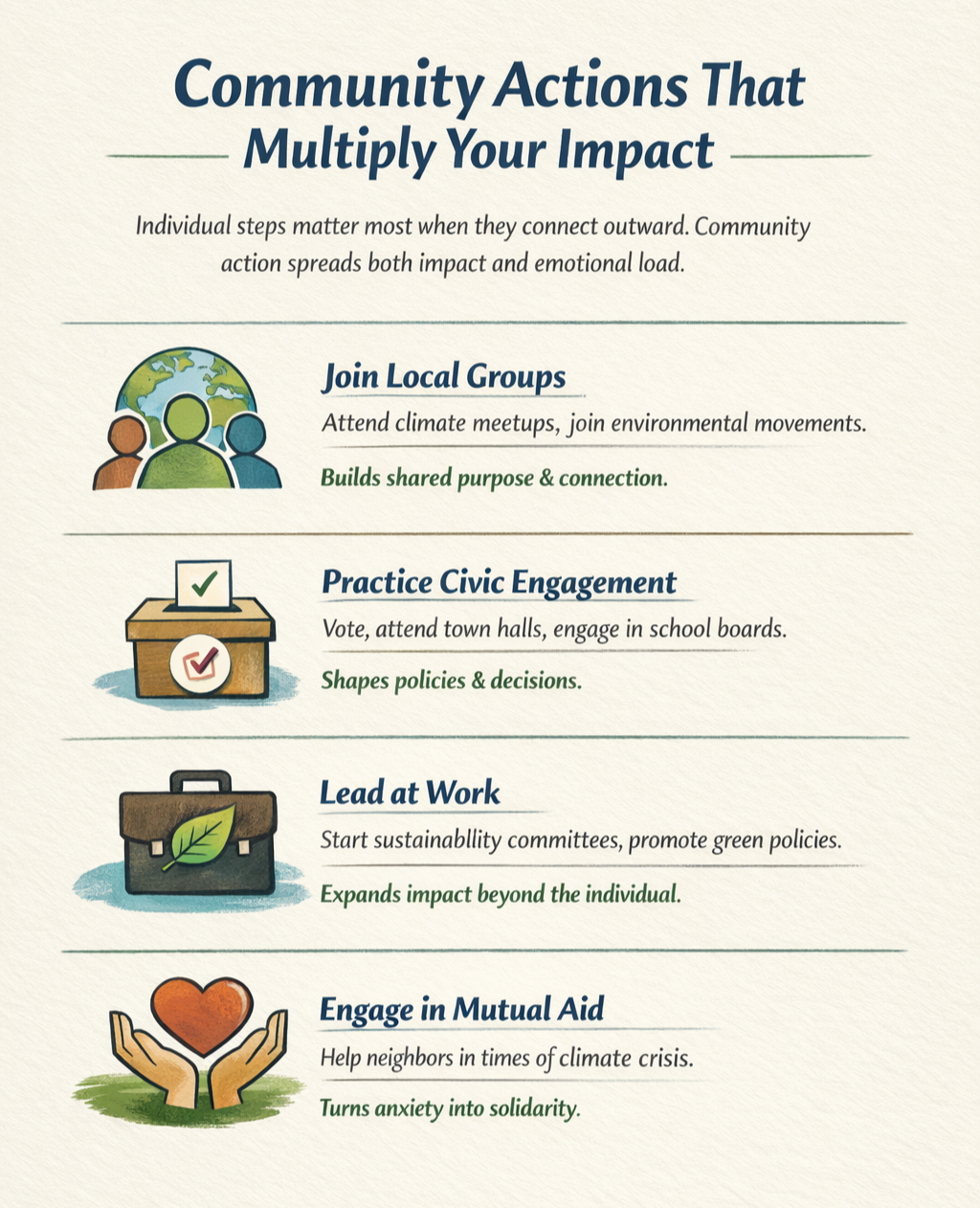
Individual steps matter most when they connect outward. Community action spreads both impact and emotional load.
Maya eventually joined a local heat-resilience group. The meetings didn’t erase her fear but they gave it somewhere to go.
Building Solutions Through Entrepreneurship
For some people, climate action becomes part of their livelihood. Starting a small eco-conscious business ,such as a refill shop, repair service, or sustainable product line ,can align values with work. The process usually involves clarifying your mission, researching demand, choosing a business structure, and setting up the basics like finances and an online presence. Many founders simplify this process by using an all-in-one platform like ZenBusiness, which can help entrepreneurs form an LLC, stay compliant, build a website, and manage finances in one place.
This path isn’t for everyone but for some, it transforms anxiety into long-term contribution.
A Resource Worth Knowing About
If climate anxiety feels heavy, evidence-based mental health support can help. Climate Psychology Alliance offers articles, practitioner directories, and educational resources focused specifically on the emotional impacts of climate change. Their work centers on validating feelings rather than dismissing them.
Common Questions People Ask When They’re Struggling
Is climate anxiety a medical condition?
Not officially, but many mental health professionals recognize it as a valid stress response.
Should I stop following climate news?
You don’t have to stop—just curate. Informed doesn’t have to mean overwhelmed.
Do individual actions really matter?
Yes, especially when they influence norms, markets, and policies.
What if my anxiety makes it hard to act at all?
That’s common. Start with emotional support first; action can follow later.
Closing thoughts
Climate anxiety is a signal that you care and that care can be protected, not extinguished. Relief doesn’t come from ignoring the problem, but from balancing inner stability with outer action. You’re not required to save the world alone. You’re allowed to take care of yourself while contributing what you can, where you are.